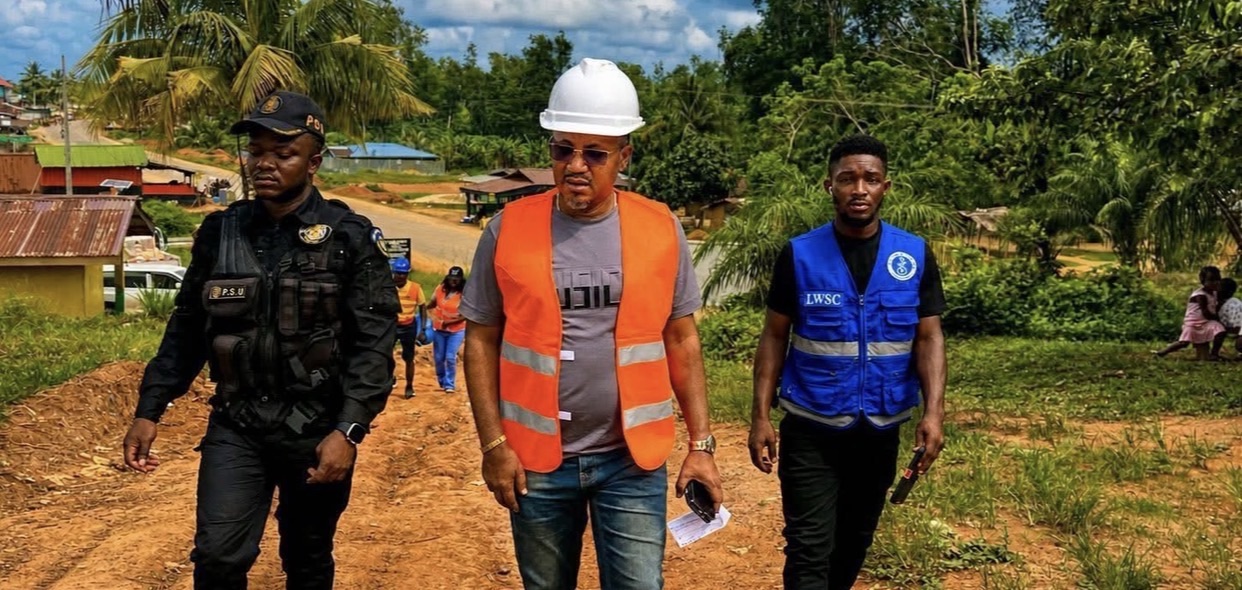
Public debate erupted after Mohammed Ali, Managing Director of the Liberia Water and Sewer Corporation (LWSC), stated on the Spoon Breakfast Show that 76 percent of Liberians have access to basic drinking water services.
While some listeners questioned the figure, a review of internationally recognized data confirms that the statistic is accurate.
The number comes from the WHO/UNICEF Joint Monitoring Programme for Water Supply, Sanitation and Hygiene (JMP), the official global authority responsible for tracking progress on water, sanitation, and hygiene under the United Nations Sustainable Development Goals.
According to the latest JMP estimates, approximately 76 percent of Liberia’s population has access to what is classified as “basic drinking water services.”
“We have seventeen thousand homes that are connected… on the over all in Liberia, 76 percent of the population have access to basic water supply.” – Mohammed Ali – Liberia Water and Sewer Corp.
Under JMP standards, this means individuals obtain water from an improved source such as piped water, boreholes, protected wells, or springs, and are able to collect it within a 30-minute round trip, including waiting time.
Importantly, this indicator does not refer only to households connected to LWSC’s water network.
Instead, it measures national access to improved drinking water from all qualifying sources across the country, including systems operated by communities, non-governmental organizations, private providers, and other institutions.
This distinction is where much of the public confusion arose.
During the same interview, Ali also disclosed that more than 17,000 homes in Monrovia are directly connected to LWSC’s running water system.
That figure specifically represents LWSC’s customer connections in the capital and should not be confused with the broader national statistic.
In practical terms, the 17,000 figure reflects households receiving piped water from LWSC, while the 76 percent figure captures Liberia’s overall access to basic drinking water from all approved sources nationwide. (check In the Liberia country estimates in Annex 3,) Click Here To See.
Both statistics are accurate and, when understood in context, provide a clearer picture of Liberia’s progress in expanding access to safe drinking water, while underscoring the need for continued investment to ensure every Liberian enjoys reliable and safely managed water services.
NOTE: Images use in this article is owned by the individuals in it, we have no right to them and we are only using it for the use of our articles. Also, please follow us on all social media media pages and join our WhatsApp Channel and Telegram channel. You can follow our YouTube and TikTok for more interesting videos and clips. Don’t miss out on anything about Gossip Liberia.