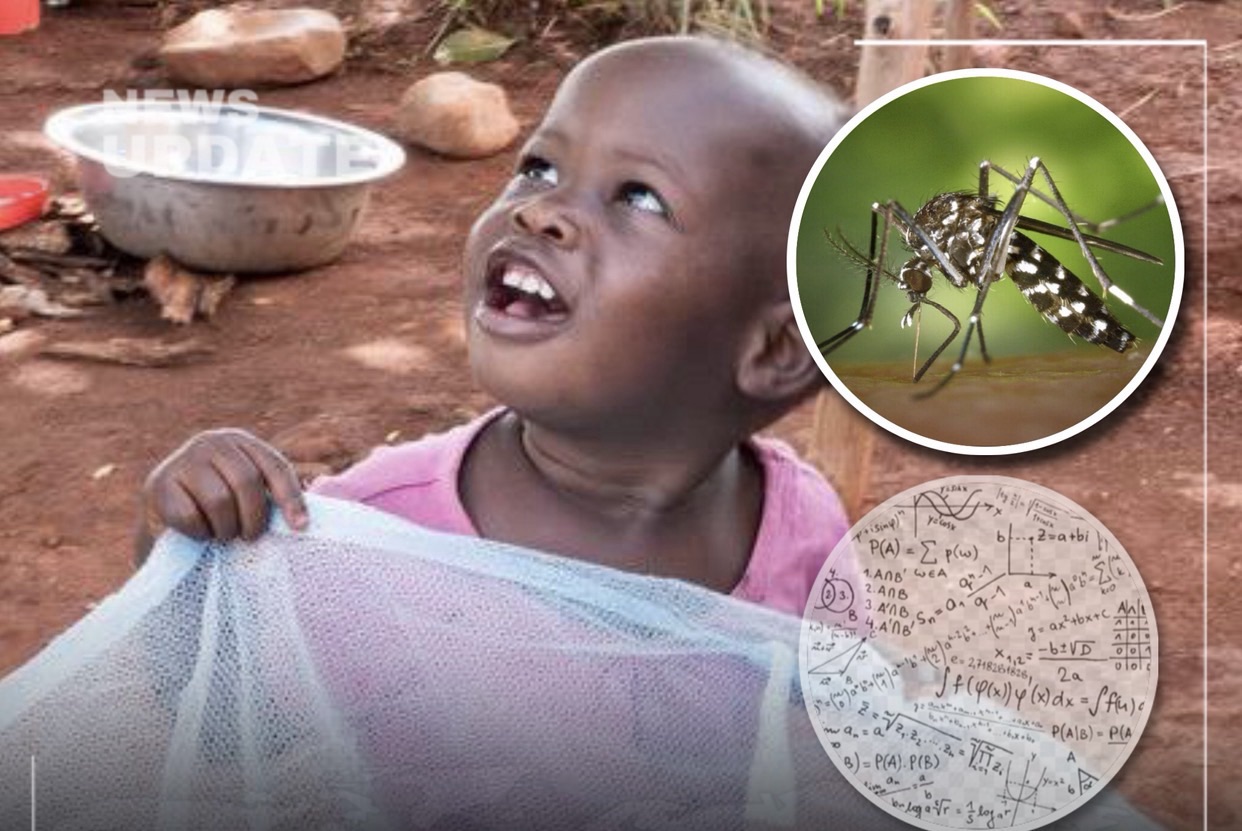
Rising infection rates and child vulnerability spark urgent concerns over education, brain development, and national productivity.
Monrovia, Liberia — A growing national conversation is taking shape as alarming health and education data intersect, raising a critical question: could Liberia’s persistent malaria burden be quietly undermining the country’s intellectual and educational development?
Recent health estimates indicate that Liberia recorded approximately 6.2 million malaria cases in 2023, a figure that exceeds the country’s estimated population of about 5.2 million people. While this may appear contradictory, health experts explain that malaria cases count repeated infections per person within a year, highlighting the intensity of transmission across the country.
With an incidence rate ranging from 172 to over 350 cases per 1,000 people at risk, and a 10% prevalence among children under five, malaria remains one of Liberia’s most pressing public health threats. Death estimates vary widely, from 3,500 to nearly 16,000 annually, suggesting underreporting and gaps in surveillance systems.
But beyond the immediate health toll, a deeper concern is emerging.
Reports circulating between 2024 and 2025 suggest that Liberia ranks among countries with low average IQ estimates, placing the national average between 45 and 65. While such figures are widely debated and often criticized for lacking cultural and methodological accuracy, experts agree on one point: chronic illness—especially in early childhood, can significantly affect cognitive development.
Medical research has consistently shown that repeated malaria infections, particularly severe cases like cerebral malaria, can lead to neurological damage, memory loss, reduced attention span, and learning difficulties in children. In a country where malaria transmission is high across 14 districts and moderate in 84 others, the long-term implications for education cannot be ignored.
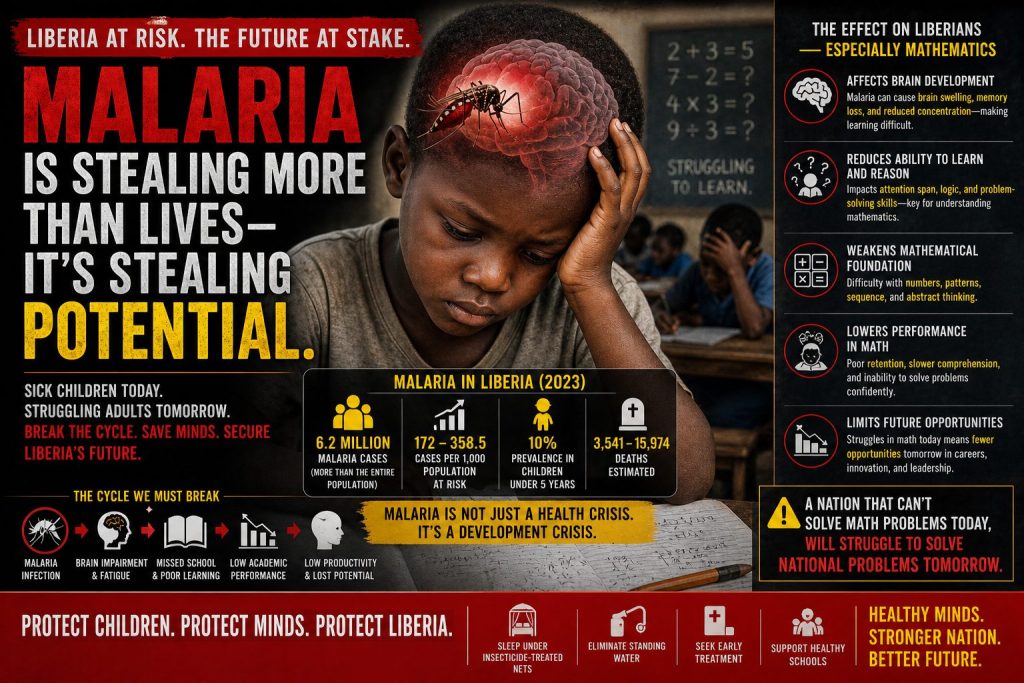
Educators across Liberia have often pointed to challenges in student comprehension, retention, and performance in subjects like mathematics. While multiple factors contribute, such as teaching quality, infrastructure, and socio-economic conditions, health experts now argue that malaria may be an overlooked but critical piece of the puzzle.
“This is not just a health issue; it’s a national development issue,” a public health analyst noted. “When children are constantly sick, missing school, or dealing with the aftereffects of infections, their ability to learn is compromised.”
The implications are far-reaching. A generation affected by poor health and reduced cognitive performance risks weakening Liberia’s workforce, innovation capacity, and economic growth.
The Ministry of Health, alongside education authorities, is being urged to treat malaria not only as a disease to control, but as a barrier to national progress. Strengthening prevention efforts, increasing access to treatment, expanding mosquito net distribution, and integrating health support into schools are among the recommended steps.
This is not a problem to ignore. It is a warning sign.
If malaria continues to shape the health and minds of Liberia’s youngest citizens, the country may face consequences that extend far beyond hospitals, into classrooms, workplaces, and the future itself.
NOTE: Images use in this article is owned by the individuals in it, we have no right to them and we are only using it for the use of our articles. Also, please follow us on all social media media pages and join our WhatsApp Channel and Telegram channel. You can follow our YouTube and TikTok for more interesting videos and clips. Don’t miss out on anything about Gossip Liberia.