

LIBERIA FOOTBALL CRISIS: CASSELL KUOH STANDS HIS GROUND AS FIFA SPOTLIGHT LOOMS
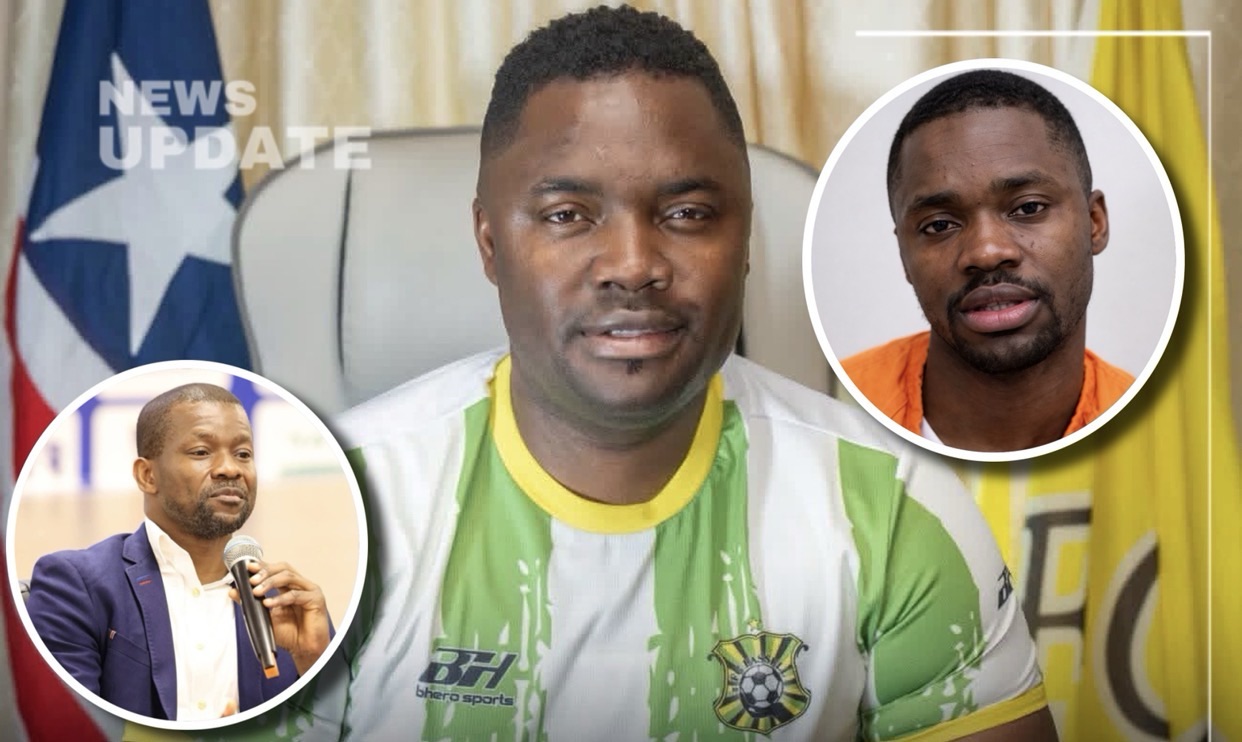
Monrovia, Liberia – The ongoing leadership dispute within the Liberia Football Association (LFA) has taken a dramatic legal and constitutional turn, as embattled football figure Cassell Kuoh continues to press his case with growing public backing and a firm reliance on Liberia’s constitutional provisions.
At the center of the debate is a powerful legal argument grounded in the 1986 Constitution of Liberia, specifically Article 21(j), which guarantees that any individual convicted of a criminal offense automatically regains their civil rights and liberties upon serving their sentence and satisfying all penalties. Supporters of Kuoh argue that this provision clearly affirms his eligibility to actively participate in football administration and public life, emphasizing that once a sentence is served, the law recognizes the individual as fully restored. This position has been reinforced by comparisons to several Liberian public officials who, after serving sentences abroad, particularly in the United States, returned home, re-entered public life, and now serve in government positions, including as lawmakers.
Kuoh’s decision to take the matter to court is increasingly being viewed as a strategic and necessary step to challenge what critics describe as selective enforcement and internal politics within the LFA. While some stakeholders have opposed his actions, others argue that the move underscores a deeper issue within the governance structure of Liberian football, where rules are perceived to be inconsistently applied. For many observers, this is no longer just a personal battle for Kuoh, but a broader test of the rule of law and institutional accountability in the sport.

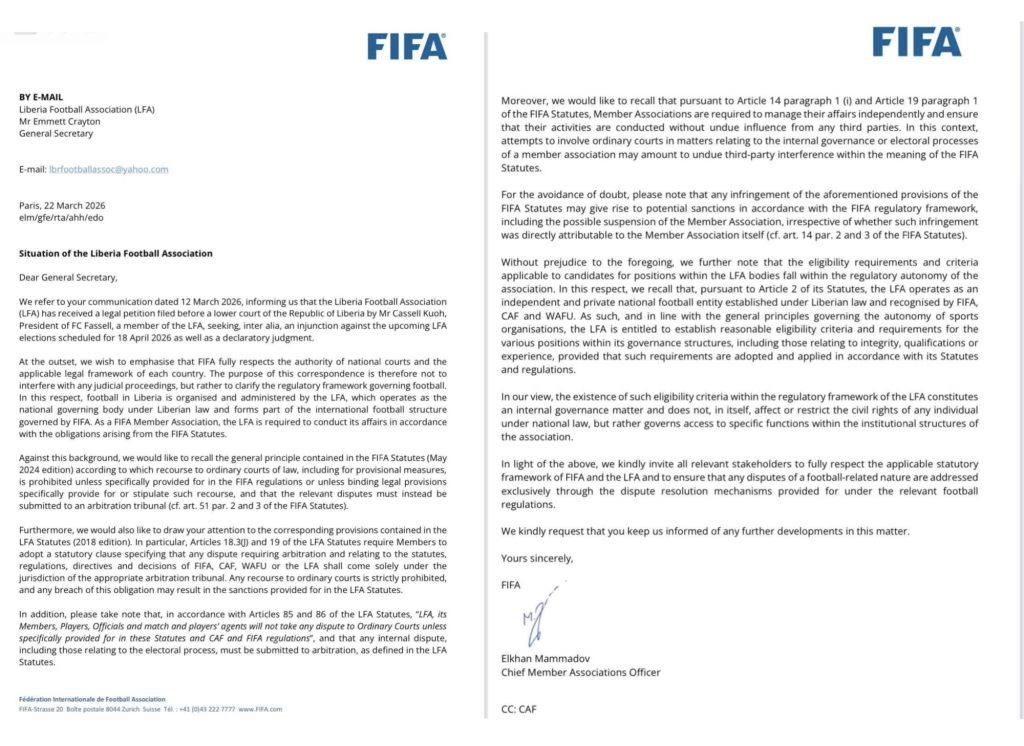
The situation has also raised concerns about potential international consequences, particularly involving FIFA, which maintains strict regulations against external interference in football administration. However, analysts note that if Liberia were to face any form of sanction or ban, responsibility would likely fall on the current leadership of the LFA for failing to resolve internal disputes within acceptable governance frameworks. FIFA’s statutes are clear on maintaining autonomy and proper internal conflict resolution, and any breakdown in these processes could attract serious scrutiny.
Public sentiment appears to be shifting as more voices call for reform within the LFA, pointing to what they describe as longstanding structural and leadership challenges that have hindered progress in Liberian football. Meanwhile, Kuoh remains resolute, showing no signs of backing down as he continues to pursue the matter through legal channels. With constitutional backing, increasing public support, and mounting scrutiny on football authorities, the case is shaping up to be a defining moment for the future of football governance in Liberia.
As court proceedings continue and tensions remain high, the outcome of this dispute could have far-reaching implications, not only for Kuoh but for the credibility, leadership, and international standing of Liberian football.
NOTE: Images use in this article is owned by the individuals in it, we have no right to them and we are only using it for the use of our articles. Also, please follow us on all social media media pages and join our WhatsApp Channel and Telegram channel. You can follow our YouTube and TikTok for more interesting videos and clips. Don’t miss out on anything about Gossip Liberia.