

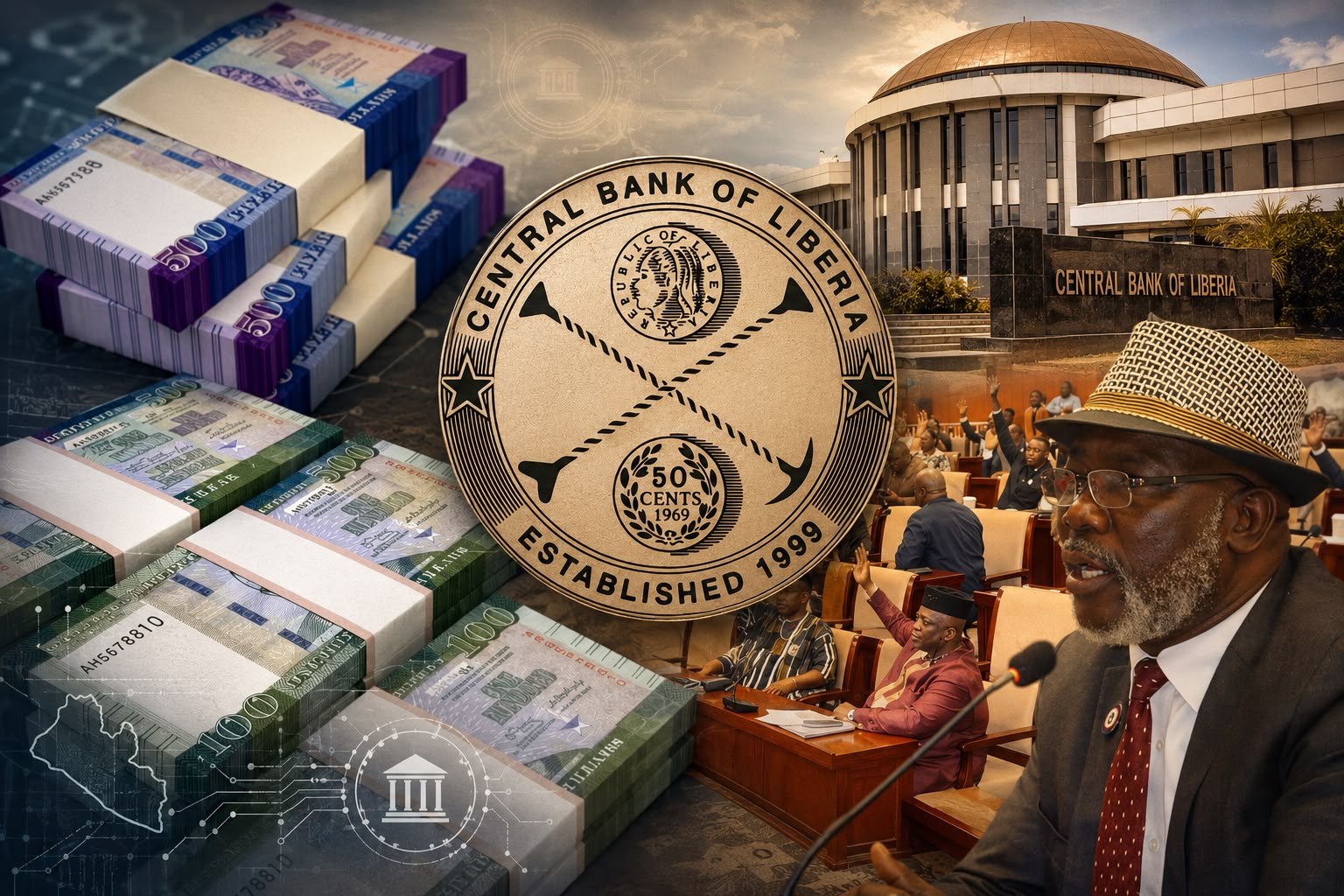
The recent discussion surrounding the printing of approximately L$79 billion in new Liberian banknotes presents an opportunity to examine a broader question: Should Liberia continue expanding the circulation of physical cash, or should it accelerate its transition toward a modern cashless economy?
Thank you for reading this post, don't forget to subscribe!While replacing worn-out currency and ensuring an adequate supply of legal tender are legitimate responsibilities of the Central Bank of Liberia, the nation’s long-term economic strategy should extend beyond the printing press. In today’s digital era, economic competitiveness is increasingly defined by secure, transparent, and efficient financial systems, not by the volume of banknotes in circulation. A cashless economy is no longer an aspiration reserved for advanced economies. Across Africa, digital payment platforms have transformed commerce, improved financial inclusion, strengthened tax administration, and enhanced transparency in both the public and private sectors. Liberia has already made meaningful progress through mobile money services and electronic banking. The next step is to expand these systems and encourage their wider adoption.
One policy worthy of national discussion is requiring that high-value transactions, particularly those exceeding US$100 or its Liberian dollar equivalent, be conducted through regulated banking channels, mobile money, or other approved electronic payment systems, while allowing carefully defined exceptions where appropriate.
Such a policy could deliver several important benefits. First, it would create an electronic record of transactions, making it more difficult for illicit financial activities such as money laundering, tax evasion, bribery, and corruption to occur unnoticed. Greater transaction transparency would also strengthen government revenue collection and improve financial accountability. Second, reducing the circulation of large amounts of cash would improve public safety. Businesses and individuals would no longer need to transport or store significant quantities of physical currency, lowering the risk of theft, robbery, and financial loss. Third, expanding digital payments would contribute to economic growth. Formal transaction records help businesses establish financial credibility, improve access to credit, and encourage greater participation in the formal economy. They also provide policymakers with more reliable economic data to support informed decision-making.
At the same time, Liberia must recognize that a successful transition to a cashless economy requires investment. Digital payment systems must be reliable, affordable, and accessible nationwide. Banking services, mobile money networks, internet connectivity, and electricity must continue expanding, particularly in rural communities. Financial literacy programs should also be strengthened so that citizens understand how to safely use digital financial services. Importantly, any move toward electronic payments should promote financial inclusion rather than create new barriers. Cash will remain necessary for many Liberians during the transition, and reforms should be implemented gradually with appropriate safeguards for vulnerable populations. Ultimately, the question is not whether Liberia should print new banknotes when necessary. The more fundamental question is whether the country’s future should continue to depend primarily on physical cash.
As the global economy becomes increasingly digital, Liberia has an opportunity to modernize its financial ecosystem, improve transparency, reduce financial crime, strengthen investor confidence, and build a more resilient economy. Success in the twenty-first century will not be measured by how much currency a nation prints, but by how efficiently, securely, and transparently money moves throughout its economy.
The conversation, therefore, should not end with the printing of L$79 billion in new banknotes. It should begin with a national commitment to building a financial system that is fit for the future.
NOTE: Images used in this article are owned by the individuals in it; we have no right to them, and we are only using them for the use of our articles. Also, please follow us on all social media pages and join our WhatsApp Channel and Telegram Channel. You can follow our YouTube and TikTok for more interesting videos and clips. Don’t miss out on anything about Gossip Liberia.